View Providers
It is sometimes necessary to remove an entire lung to treat severe lung diseases. This is called a pneumonectomy. Lung cancer is a common reason for having it. Pneumonectomy is major surgery involving a large incision. As a result, recovery can be a challenge. Learn what to expect as you recover and rehabilitate after a pneumonectomy.
Recovering in the Hospital
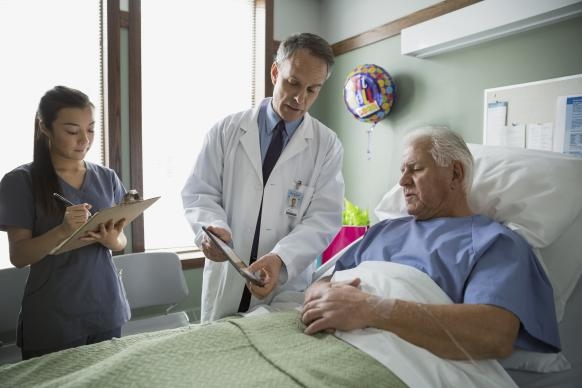
You will spend some time in an intensive care unit (ICU) after surgery. At some point, you may move to a hospital room outside the ICU. Expect a hospital stay of 5 to 10 days.
When you first wake up, you may have a breathing tube and other tubes and wires on your body. These allow your team to monitor your vital signs, drain fluids from your chest and bladder, take blood, and give medications and fluids. You won’t be able to talk with a breathing tube, but your team usually removes it within 24 hours.
You will start rehabilitation in the hospital. This includes physical, occupational, and respiratory or pulmonary therapies. These therapies are vital for recovery and will help you regain strength and endurance.
Going Home
Your doctor will send you home once you are stable. Expect your care team to give you instructions for caring for yourself at home. They will also talk to you about your next steps and follow-up appointments.
You will need some support at home as you recover. You may tire easily and it may take you longer to complete daily activities, such as showering and dressing. Someone will need to run errands for you until you are driving again. Talk to your doctor well before surgery if you live alone or need outside assistance.
Caring for Your Incision
Your care team will give you specific instructions about your incision. In most cases, you can shower and wash the incision with warm, soapy water. Doctors usually discourage baths and soaking the incision.
It’s normal to have some swelling and bruising when you first go home. You may also have itching, tenderness and numbness. These will gradually subside and feeling will return. Call your doctor if you have a high fever or redness, warmth, increasing pain, or drainage from your incision.
Controlling Pain
You will have discomfort, especially with breathing, as you recover. Remember that it’s easier to prevent pain from getting worse than it is to control pain once it’s bad. Stay on top of the pain by following your doctor’s instructions for pain medicines. It can take several weeks for the pain to subside.
Continuing Rehabilitation
Rehabilitation will continue once you’re home. Physical therapy helps you regain strength and endurance. Occupational therapy teaches you how to complete daily activities while conserving energy. And pulmonary rehabilitation increases your lung capacity and decreases shortness of breath. Expect pulmonary rehabilitation 3 to 4 days per week for several weeks. And be diligent about practicing your breathing exercises.
Regaining Strength
Strength will return gradually as you recover. You can speed this along by walking and practicing your breathing exercises. Your doctor may recommend walking up to 30 minutes a day. Walking helps your circulation, lung capacity, and strength. Deep breathing exercises increase your lung function and decrease shortness of breath. Above all, don’t smoke. Smoking will decrease the function of your remaining lung.
Returning to Activities
Shortness of breath improves as you recover, but it may always be a problem. As your lung function and strength improve, your doctor or therapist will allow more and more activities. It can take 6 to 8 weeks to return to work, sex, and other moderate activities. Most people can drive when they no longer need pain medicine. Ask your doctor before starting new activities.
Staying in Touch With Your Doctor
You will have follow-up visits with your doctor, usually at two and four weeks after you leave the hospital. After that, it will depend on your diagnosis and condition. It’s important to keep these appointments. Call your doctor right away if you have sudden or severe shortness of breath, increased chest pain, or heart palpitations.